6 min read
High-protein yoghurt, high-protein cereal, even high-protein crisps. Somewhere between the bread aisle and the till, protein became the answer to everything.
An app suggests 120 grams a day. A friend has started stirring protein powder into her morning coffee. Eating starts to feel like a maths exercise.
Some of this advice is sound. Muscle deserves attention in midlife, and protein helps maintain it. But how much do we really need?
If you read nothing else, read this
One thing worth knowing: Strength training helps maintain and build muscle. Protein supplies the materials to support that work, but more isn't always better.
One thing to ponder: Are you eating more protein to support a goal, or has the number become the goal?
One thing to experiment with: Pick one meal you eat regularly. Would a different protein source or portion make it more satisfying or better suited to your needs?
Why does protein matter in midlife?
Strong muscles help us get up off the floor, carry the shopping upstairs, lift hand luggage into the overhead compartment and stay active as we age.
Muscle also helps regulate blood glucose and provides a reserve of amino acids for tissue repair during serious illness or recovery from surgery. [1]
Muscle mass and strength tend to decline with age, but regular physical activity can help preserve muscle mass, while resistance training helps maintain and improve strength. [2, 3]
Protein supplies the building blocks, but resistance training provides the stimulus for muscle adaptation. For more on the wider benefits of movement, see Rethinking physical activity in midlife.
Does menopause itself increase protein requirements? No menopause-specific target has been established. We don't really know yet whether muscles become less responsive to protein with age, particularly in women. [3] What we do know is that strength training improves muscle strength and physical function after menopause. [4]
Will building muscle speed up my metabolism?
A little. Much less than we're often led to believe.
A kilogram of muscle uses approximately 13 calories a day at rest. [5] Gain three kilograms, which takes considerable training, and that's around 39 extra calories daily. Roughly half a digestive biscuit.
The benefits go far beyond those calories. Strength training improves strength, blood glucose regulation and physical performance, even without substantial muscle growth.
Our muscles support our health, physical capability and independence. It's not about the calories they burn at rest.
How much protein is actually enough?
The UK reference intake is 0.75 g per kilogram of body weight daily, approximately 53 g for a woman weighing 70 kg. [6]
This covers general protein needs, but may not be the most useful amount for someone strength training regularly or trying to preserve muscle during fat loss.
In those circumstances, around 1.2 to 1.6 g/kg/day is a reasonable starting range. [7, 8] For a 70 kg woman, that's roughly 85 to 110 g daily.
How firm are those numbers?
Extra protein can help when you're strength training, but the benefit tails off. [7] In postmenopausal women, higher protein intakes haven't consistently produced additional improvements in muscle mass or strength, although one trial found a small improvement in physical function. [9, 10] The higher range may be particularly useful when you're eating less to lose fat and want to protect muscle. [8]
So there's no magic number. There's a sensible range, and then there's your life.
For people living with obesity, calculating protein from current body weight can produce unnecessarily high targets. Basing it on a suitable reference weight can give a more sensible number. Or skip the calculation and aim for around 25 to 30 g at each meal.
Does every meal need 30 grams?
No. Around 25 to 30 g per meal is a useful guide, not a requirement or an upper limit.
The recommendation comes partly from research into how protein stimulates muscle growth and repair. An amino acid called leucine helps activate this process. Guidance for older adults sometimes suggests around 2.5 g of leucine within a protein-rich meal. [11]
But there's no precise threshold where muscle building suddenly switches on. Smaller amounts still contribute, and protein above 30 g isn't wasted. [12]
Spreading protein across meals can be convenient, but what matters more is eating enough overall, alongside regular strength training.
What does that look like on a plate?
A few examples:
Breakfast: Three-egg omelette, two slices of wholemeal toast and tomatoes, around 28 g protein.
Breakfast or light lunch: 200 g strained Greek yoghurt, 40 g oats, 15 g pumpkin seeds and berries, around 30 g.
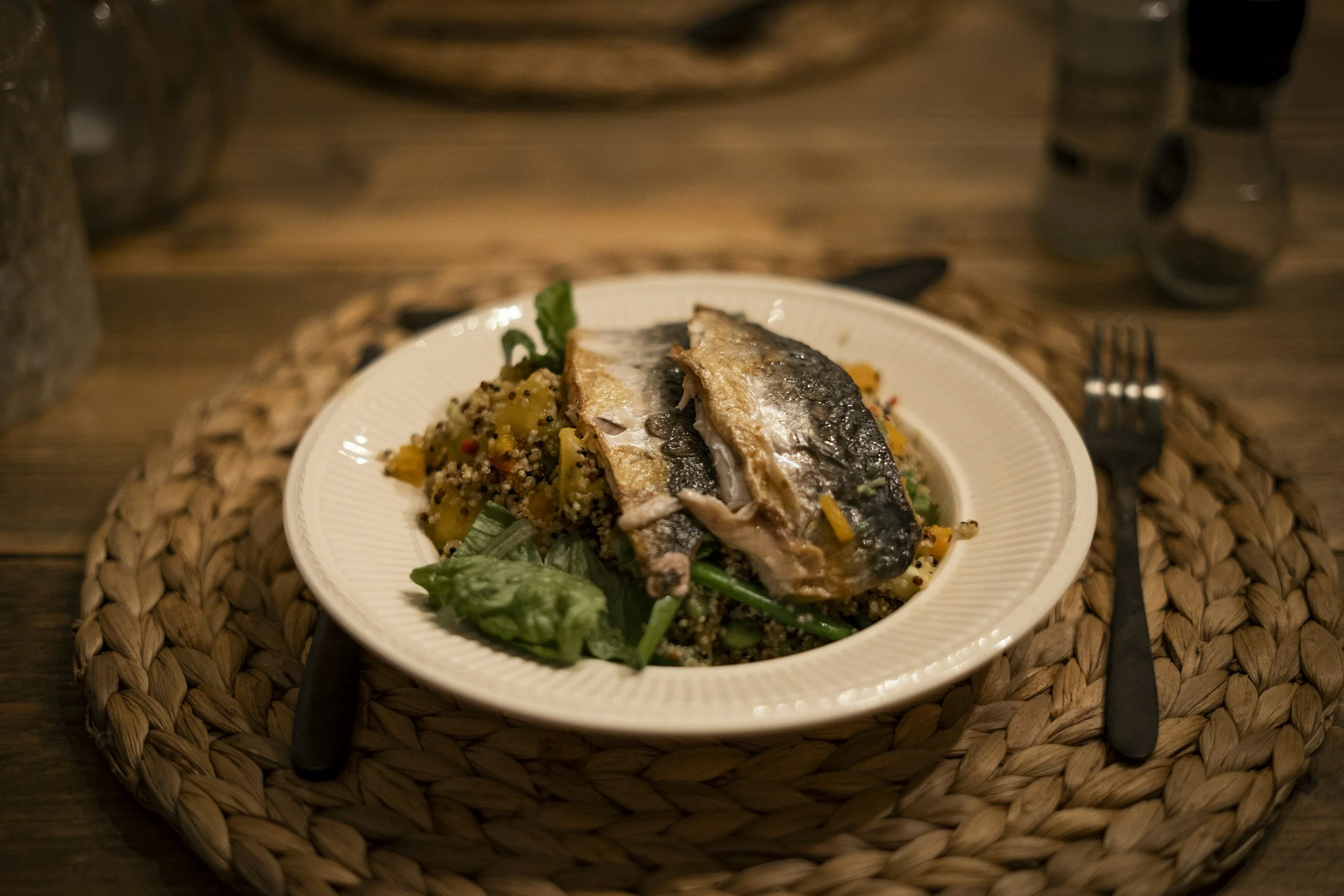
Lunch: Lentil salad with 100 g cooked lentils and a small tin of sardines, around 30 g.
Three meals providing roughly 25 to 30 g each, plus some protein from other foods during the day, can bring intake towards 85 to 100 g without supplements or complicated calculations.
Is animal protein better than plant protein?
Animal proteins generally provide more concentrated essential amino acids and are often easier to digest. Animal protein may have a slight edge for building muscle. But when it comes to strength and everyday function, the difference largely disappears. Soy protein is a good alternative to protein from dairy. [13]
A varied plant-based diet can provide adequate protein, although higher intakes may take a little more planning.
The rest of the package matters
Protein rarely comes alone.
200 g cooked lentils provide roughly 18 g protein alongside carbohydrate and fibre. Around 100 g cooked chicken breast provide approximately 30 g, with relatively little fat or carbohydrate.
Nuts, seeds and cheese provide protein alongside substantial dietary fat.
Each food brings something different. Lentils provide fibre, oily fish supplies omega-3 fats and dairy calcium.
If fat loss is the goal, how much protein a food provides relative to its energy content is worth considering. But protein content alone doesn't determine a food's nutritional value.
Can eating more protein help with fat loss?
Yes, particularly during energy restriction, protein-rich meals can help you feel fuller for longer, making an energy deficit easier to maintain. Protein also takes more energy to digest than carbohydrate or fat, although the difference is modest.
And adequate protein, particularly alongside strength training, can help preserve muscle during weight loss.
But protein is only one part of the picture. Hunger, satisfaction, eating habits and our food environment also influence how much we eat. For a closer look, see Hunger Games: Why restrictive diets can backfire.
Whether eating even more protein speeds up fat loss is far less certain.The protein bar at 3 pm, the shake after the gym, the extra cheese and double burger for the protein. They all add energy.
If those additions eliminate the intended energy deficit, fat loss may slow down or stop.
Extra protein can still lead to fat gain. Protein doesn't override energy balance. If it adds to an energy surplus, the body can use more protein for fuel, burn less fat and store more of the fat we eat. [14]
For a broader explanation of the changes that can make weight management more challenging in midlife, see Why fat loss feels harder after 40, and what to do about it.
Is the 'high-protein' label worth paying for?
Sometimes. Some products offer a convenient way to get more protein. Others cost considerably more than ordinary alternatives for relatively little extra protein.
In the UK, a food can carry a 'high protein' claim when at least 20% of its energy comes from protein. [15] The claim may be accurate, but it doesn't tell you whether the product is healthier, better value or something you actually need.
Before paying extra, compare the protein per portion, the price and what else the food provides.
Protein needs may differ for people with chronic kidney disease, who should seek individual advice. [16]
The bottom line
The best protein target is the one that fits your training, your goals and your actual week. For most women in midlife, that means a little more attention. Not a new obsession, and certainly not high-protein everything.
If you'd like help finding an approach to nutrition that fits your goals and everyday life, get in touch.
References
Wolfe RR. (2006). The Underappreciated Role of Muscle in Health and Disease. American Journal of Clinical Nutrition, 84(3), 475-482.
Juppi HK et al. (2020). Role of Menopausal Transition and Physical Activity in Loss of Lean and Muscle Mass: A Follow-Up Study in Middle-Aged Finnish Women. Journal of Clinical Medicine.
Isenmann E et al. (2026). It's Never Too Late: The Impact of Resistance Training on Strength and Body Composition in Females Across the Lifespan. A Systematic Review and Meta-analysis. Journal of Science and Medicine in Sport, 29(10), 1174-1185. https://doi.org/10.1016/j.jsams.2026.03.002
Menzies C et al. (2026). Menopause, Female Sex Hormones, Skeletal Muscle Mass and Muscle Protein Turnover in Humans. Journal of Cachexia, Sarcopenia and Muscle.
Wang Z et al. (2010). Specific Metabolic Rates of Major Organs and Tissues Across Adulthood: Evaluation by Mechanistic Model of Resting Energy Expenditure. American Journal of Clinical Nutrition.
British Nutrition Foundation. Protein: Nutritional Information and UK Reference Intakes.
Morton RW et al. (2018). A Systematic Review, Meta-analysis and Meta-regression of the Effect of Protein Supplementation on Resistance Training-Induced Gains in Muscle Mass and Strength in Healthy Adults. British Journal of Sports Medicine.
Kim JE et al. (2016). Effects of Dietary Protein Intake on Body Composition Changes After Weight Loss in Older Adults: A Systematic Review and Meta-analysis. Nutrition Reviews, 74(3), 210-224. https://doi.org/10.1093/nutrit/nuv065
Nahas PC et al. (2019). Moderate Increase in Protein Intake Promotes a Small Additional Improvement in Functional Capacity, But Not in Muscle Strength and Lean Mass Quality, in Postmenopausal Women Following Resistance Exercise: A Randomized Clinical Trial. Nutrients, 11(6), 1323. https://doi.org/10.3390/nu11061323
Walter F et al. (2026). Analysis of the Additive Effects of Nutritional Strategies in Strength Training Interventions on Body Composition, Muscle Strength and Bone Mineral Density in Postmenopausal Women: A Systematic Review. Sports Medicine - Open. https://doi.org/10.1186/s40798-025-00954-2
Bauer J et al. (2013). Evidence-Based Recommendations for Optimal Dietary Protein Intake in Older People: A Position Paper from the PROT-AGE Study Group. Journal of the American Medical Directors Association.
Trommelen J et al. (2023). The Anabolic Response to Protein Ingestion During Recovery from Exercise Has No Upper Limit in Magnitude and Duration in Vivo in Humans. Cell Reports Medicine, 4(12), 101324.
Reid-McCann RJ et al. (2025). Effect of Plant Versus Animal Protein on Muscle Mass, Strength, Physical Performance, and Sarcopenia: A Systematic Review and Meta-analysis of Randomized Controlled Trials. Nutrition Reviews, 83(7), e1581-e1603.
Unlu Y et al. (2025). Protein Oxidation in Non-Exercising Healthy Adults Under Varying Dietary Conditions: Physiological Determinants, Effects on Fuel Partitioning, and Implications for Body Weight Regulation. Metabolism, 169, 156270. https://doi.org/10.1016/j.metabol.2025.156270
Regulation (EC) No 1924/2006 on Nutrition and Health Claims Made on Foods. Annex: Conditions for the Use of the Claim HIGH PROTEIN.
KDIGO. (2024). Clinical Practice Guideline for the Evaluation and Management of Chronic Kidney Disease. Kidney International.