The truth about Intermittent Fasting for women over 40, Part 1: Weight management, muscle preservation, and metabolism
6 min read
If you read nothing else, read this
One thing worth knowing: When calories are matched, intermittent fasting and calorie restriction produce identical results for fat loss and blood sugar regulation. The benefit of fasting is convenience, not a special metabolic edge.
One thing to ponder: Is the eating pattern you're following one you actually enjoy, or one you're enduring because you've been told it's “optimised”?
One thing to experiment with: Move dinner an hour earlier for one week and notice what happens to your sleep.
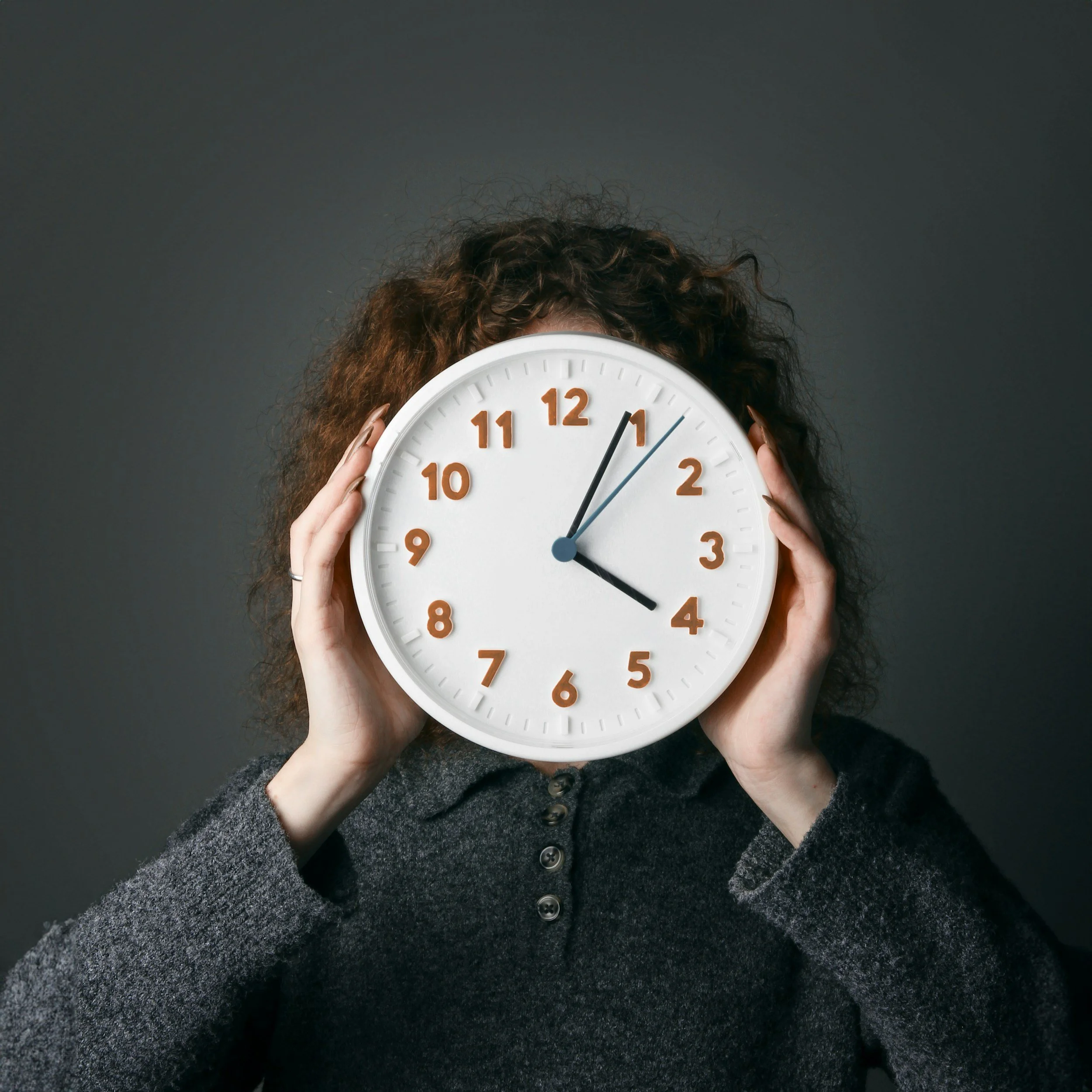
Intermittent fasting gets talked about like a biological cheat code, with special fat-burning triggers and cellular repair flicking on like a light switch.
What it actually means is restricting when you eat, not what you eat. The most commonly tested versions are 16:8, eating within an eight-hour window each day, often by skipping breakfast; alternate-day fasting, eating very little every other day; and 5:2, eating normally five days a week and cutting calories sharply on two.
This is the first of two posts on what the research says. Part one covers weight management, muscle preservation, and metabolism. Part two covers autophagy, cortisol, and the sign it isn't working for you.
There's no secret metabolic edge, just convenience.
When calories are matched, intermittent fasting and calorie restriction produce the same results: same fat loss, same blood sugar improvements [1][2]. If fasting had a real metabolic advantage, we'd expect to see it by now. What it does have is convenience. If a shorter eating window means you naturally eat less without feeling deprived, that's the whole win.
Strength training and muscle loss in midlife
Strength matters because it's what lets you carry the shopping in one trip, get up from a low chair or a toilet seat without help, and get down on the floor with a grandchild and back up again. It lowers your risk of a fall and everything that follows one.
Muscle loss in midlife is slower than most people think, running at about 0.5 to 1% a year and becoming measurable after around age 50 [3]. Strength declines earlier, and in women earlier still, from about 50 against 70 in men [4]. That matters more than the mass does, because strength is what lets you carry the shopping in one trip, get up from a low chair without help, and lower your risk of a fall.
Protecting both needs two things: adequate protein and the stimulus of strength training. Neither works alone. Two years of protein supplementation in postmenopausal women, without training, changed nothing [5].
The evidence supports 1.2 to 1.6g of protein per kilogram of body weight a day. For a 75kg woman, that's 90 to 120g, or 30 to 40g across three meals [6][7].
Which is where fasting can make things harder. Two meals instead of three means 45 to 60g at a sitting. Our bodies can handle a large dose, it just takes longer to process and past a point it stops being comfortable. For most women, used to eating half that amount for most of their lives, this takes planning.
Fasted exercise: benefits and risks
Fasted exercise has a reputation for burning more fat. It doesn't. In the long term, body composition depends on overall nutrition and training, not on whether you ate before a session [8][9]. Being smart with how you fuel your workouts matters more for longer sessions or if you've gone many hours without eating, a small carbohydrate snack beforehand can help in those cases. For a typical strength session, what you eat across the whole day matters more than anything eaten right before. Protein and carbohydrate around training support recovery and building strength. The timing is more flexible than commonly believed: protein taken immediately before training works as well as the same amount immediately after, and the practical window for intake spans roughly 4 to 6 hours, before or after a session, not a race against the clock the moment you finish [10][11].
For fat loss, what works is a sustainable calorie deficit over time, not fasting as a special method, as already mentioned. Fasting can be one route into that deficit for some, but not necessarily a superior one.
"Eat dinner like a pauper" is probably good advice.
One argument for fasting is that it raises growth hormone. It does, but growth hormone rises at night anyway, as a normal part of sleep. Any extra rise on top of that is a stress response, not a muscle-building signal [12].
What does seem to matter is when you stop eating. Eating close to bedtime is linked to more broken sleep and lower sleep efficiency [13], and the reason is more mundane than hormonal. Digestion generates heat, and your body is trying to cool down for sleep at exactly that point [14].
There's a weight angle too. In one trial, women who were overweight or obese ate the same daily calories weighted towards breakfast rather than dinner, and lost more weight with better blood sugar control [15]. It was a single study, so hold it lightly. But if you're going to shift your eating window at all, an earlier, lighter dinner looks like a better bet than skipping breakfast.
Just don't expect too much of it. When calories are held equal, moving your eating window earlier hasn't produced meaningful metabolic changes in trials. Finishing dinner well before bed is worth doing because it protects your sleep, not because it burns more fat.
In summary
When calories are matched, intermittent fasting and calorie restriction produce the same results for weight loss, fat loss, and blood sugar regulation. For some people, the benefit of intermittent fasting is convenience, a simpler way to reach that same deficit, not a special metabolic effect.
Resistance training is the best way to protect muscle mass and strength in midlife. Fasted training doesn't provide an advantage. Being smart with how you fuel your workouts supports performance, recovery, and building strength.
Eating breakfast earlier in the day and finishing dinner well before bed is linked to better sleep and steadier blood glucose through the day. Quality sleep matters for so many reasons, and I'll cover that properly in a future post.
If you want help working out what's worth your effort and what isn't, book a free discovery call. It's a friendly conversation. You'll leave clearer on what actually drives results in midlife, whether or not we work together.
In part two, what the evidence actually says about autophagy, cortisol, and the sign that fasting isn't working for you.
References
[1] Seimon RV, Roekenes JA, Zibellini J, Zhu B, Gibson AA, Hills AP, Wood RE, King NA, Byrne NM, Sainsbury A. Do intermittent diets provide physiological benefits over continuous diets for weight loss? A systematic review of clinical trials. Molecular and Cellular Endocrinology. 2015. https://pubmed.ncbi.nlm.nih.gov/26384657
[2] Headland M, Clifton PM, Carter S, Keogh JB. Weight-loss outcomes: a systematic review and meta-analysis of intermittent energy restriction trials lasting a minimum of 6 months. Nutrients. 2016. https://pubmed.ncbi.nlm.nih.gov/27338458
[3] Mitchell WK et al. Front Physiol. 2012;3:260
[4] Skeletal muscle dysfunction with advancing age. Clin Sci. 2024;138(14):863
[5] Zhu K et al. J Nutr. 2015;145:2520-2526
[6] Bauer J et al. PROT-AGE. J Am Med Dir Assoc. 2013;14(8):542-559
[7] Morton RW et al. Br J Sports Med. 2018;52(6):376-384
[8] Schoenfeld BJ, Aragon AA, Wilborn C, Krieger JW, Sonmez GT. Body composition changes associated with fasted versus non-fasted aerobic exercise. Journal of the International Society of Sports Nutrition. 2014. https://pubmed.ncbi.nlm.nih.gov/25429252
[9] Hackett D, Hagstrom AD. Effect of overnight fasted exercise on weight loss and body composition: a systematic review and meta-analysis. Journal of Functional Morphology and Kinesiology. 2017. https://www.mdpi.com/2411-5142/2/4/43
[10] Aragon AA, Schoenfeld BJ. Nutrient timing revisited: is there a post-exercise anabolic window? Journal of the International Society of Sports Nutrition. 2013;10:5. https://jissn.biomedcentral.com/articles/10.1186/1550-2783-10-5
[11] Schoenfeld BJ, Aragon AA, Wilborn C, Urbina SL, Hayward SE, Krieger J. Pre- versus post-exercise protein intake has similar effects on muscular adaptations. PeerJ. 2017;5:e2825. https://peerj.com/articles/2825/
[12] Sassin JF, Parker DC, Mace JW, Gotlin RW, Johnson LC, Rossman LG. Human growth hormone release: relation to slow-wave sleep and sleep-waking cycles. Science. 1969;165(3892):513-515. https://www.science.org/doi/10.1126/science.165.3892.513
[13] Bohlman C, McLaren C, Ezzati A, Vial P, Ibrahim D, Anton SD. The effects of time-restricted eating on sleep in adults: a systematic review of randomized controlled trials. Frontiers in Nutrition. 2024;11:1419811. https://www.frontiersin.org/journals/nutrition/articles/10.3389/fnut.2024.1419811/full
[14] Saidi O, Rochette E, Dambel L, St-Onge MP, Duché P. Chrono-nutrition and sleep: lessons from the temporal feature of eating patterns in human studies, a systematic scoping review. Sleep Medicine Reviews. 2024;76:101953. https://doi.org/10.1016/j.smrv.2024.101953
[15] Jakubowicz D, Barnea M, Wainstein J, Froy O. High caloric intake at breakfast vs. dinner differentially influences weight loss of overweight and obese women. Obesity (Silver Spring). 2013;21(12):2504-2512. https://pubmed.ncbi.nlm.nih.gov/23512957