Why women struggle with weight gain and their health in midlife, and where to actually start.
4min read
If you read nothing else, read this
One thing worth knowing: In a controlled setting, with meals matched for calories, fat, sugar, fibre, and protein, people eating ultra-processed food consumed around 500 kcal more a day without noticing.
One thing to ponder: What is one thing in your day that is running on autopilot that could be more intentional?
One thing to experiment with: Slow down at your next meal, give yourself twenty minutes, ideally with someone you like, no phones, no distractions, and notice how you feel.
If your first thought when you see another piece of health and fat loss content is here we go again — I get it.
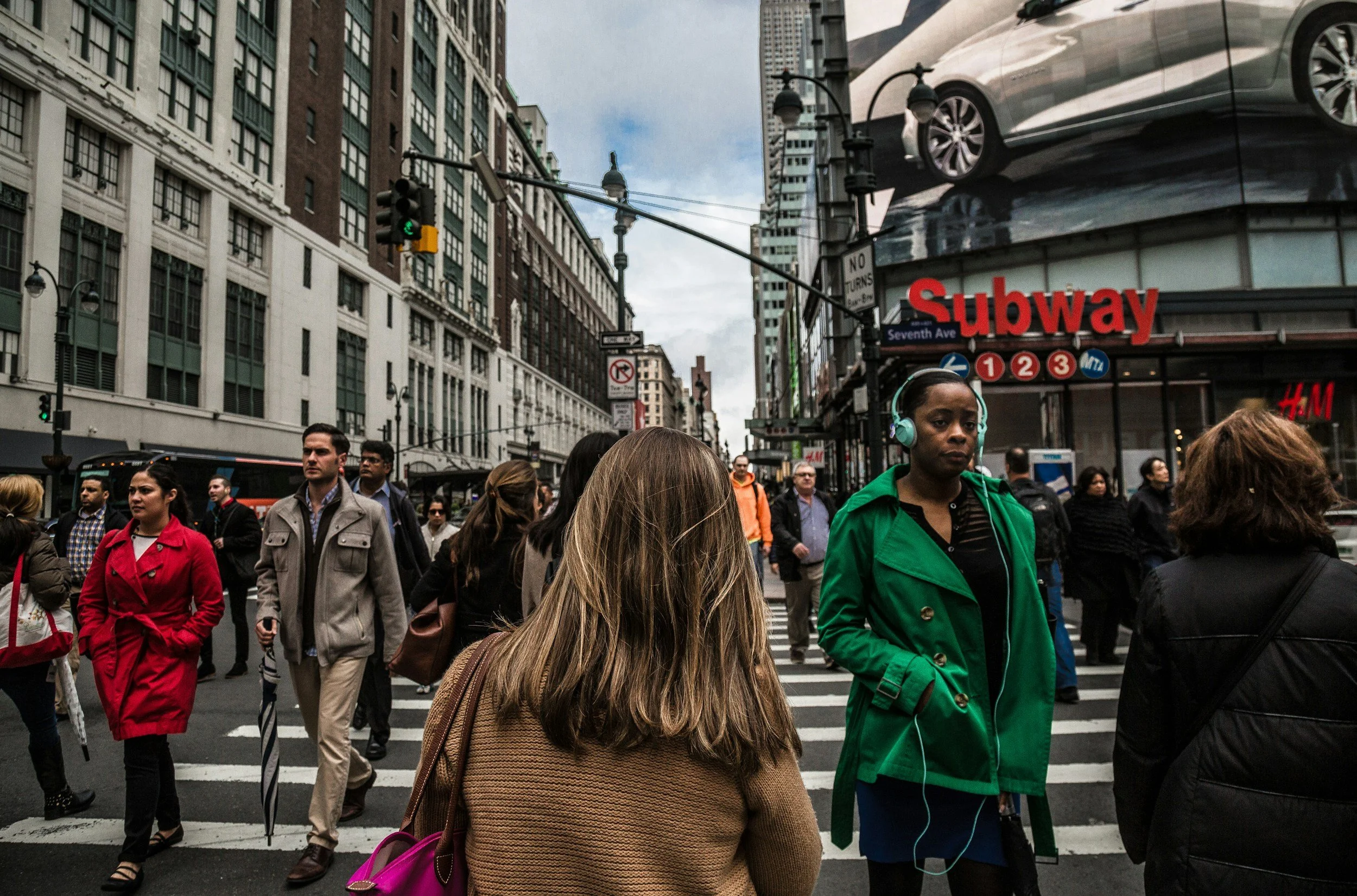
The world most of us live in was not designed with our health as the priority. The conditions for chronic disease have been decades in the making. Food engineering, conflicting nutritional science, Governments that have been slow to act. The pace of modern life. Wellbeing at work reduced to an intranet announcement while the conditions that lead people to burnout stay firmly in place. The slow erosion of the social structures that kept people well long before anyone had a gym membership or a nutrition app.
Health does not exist in a vacuum. Where you live, how you work, what you can afford, and the demands on your time and energy all shape the choices available to you. That is not an excuse, it is context. And context matters.
Individual action alone will not fix systemic problems. But waiting for the system to change is not a health strategy.
The information we have is not always the information we need
More information tends to produce more confusion and less action. One season fat is the problem, the next is sugar, then gluten, then seed oils. Genuine expertise tends to produce nuance rather than certainty. More "it depends, there is no one size fits all" rather than "always do this."
The problem is not just what we eat. It is what we are told to eat, how often the guidance changes, and how little of it accounts for the life most of us are actually living. What moves the needle is what we can do consistently, and it can be different for different people and different seasons of life.
The environment shapes our actions more than we realise
Ultra-processed foods now account for more than half of the average UK diet [1]. They are convenient, affordable, and engineered to be difficult to stop eating. Global obesity rates have more than doubled since 1990 [2]. Type 2 diabetes affects approximately 4.4 million people in the UK, with a further 900,000 living with it undiagnosed [3]. Cardiovascular disease remains the leading cause of death worldwide [4].
Willpower is a limited resource. It depletes after a poor night's sleep [5] and a long stressful day [6]. When energy is low and the day has been long, decisions default to habit. That is not weakness, it is how the brain conserves energy. And then we call it a discipline problem.
We are asking people to make consistently healthy choices in environments that were not built to support them.
So where do we actually start?
Start with what is within your reach.
Preparing the first meal of the day in advance. Paying attention to what you bring in the house. Ten minutes in the morning or evening to plan the next day. Thirty minutes at the weekend to look at the week ahead. A proper look at your calendar (where your time actually goes can be surprisingly revealing).
Small, specific, real actions that interrupt the autopilot and give you back a moment of choice.
Sustainable change starts with understanding your patterns, not following a plan someone handed you.
What research shows
A randomised controlled trial published in Cell Metabolism gave participants unrestricted access to either ultra-processed or unprocessed food for two weeks, then switched them around [7]. The meals were matched for total calories, fat, sugar, fibre, and protein.
People eating ultra-processed food consumed around 500 kcal more a day without noticing.
The authors proposed that ultra-processed food interferes with normal satiety signalling through eating rate, food texture, and palatability.
Food quality matters in ways that go beyond calorie counting.
Three takeaways
The type of food you eat shapes how much you eat, more than you realise.
Slowing down at meals, adding protein and fibre, and eating without distraction, ideally with someone you like, are among the most underrated things you can do for satiety, satisfaction after your meals and for your health.
Small, specific actions that interrupt the autopilot give you back a moment of choice. That is where change begins.
If you want to understand what is actually driving your patterns, a free discovery call is the place to start. An honest look at where you are and what would help most.
References
[1] Monteiro CA et al. Ultra-processed foods: what they are and how to identify them. Public Health Nutrition. 2019. Verify UK dietary proportion against current NDNS data before publication.
[2] World Health Organization. Obesity and overweight fact sheet. 2024.
[3] Diabetes UK. Diabetes statistics. 2024.
[4] World Health Organization. Cardiovascular diseases fact sheet. 2023.
[5] Walker M. Why We Sleep. 2017.
[6] McEwen BS. Stress, adaptation, and disease. Allostasis and allostatic load. Annals of the New York Academy of Sciences. 1998.
[7] Hall KD et al. Ultra-processed diets cause excess calorie intake and weight gain: an inpatient randomised controlled trial of ad libitum food intake. Cell Metabolism. 2019.